Available courses

Jeju is a great place to play tennis with a variety of hotel and municipal facilities making it possible to play tennis year-round. There are four international schools in the Global Education City offering students the chance to study in English at globally recognized schools and campuses. The athletic complex in Jeju City is very affordably priced with all the training facilities any aspiring athlete would ever need.
- Teacher: Tom Carlaw
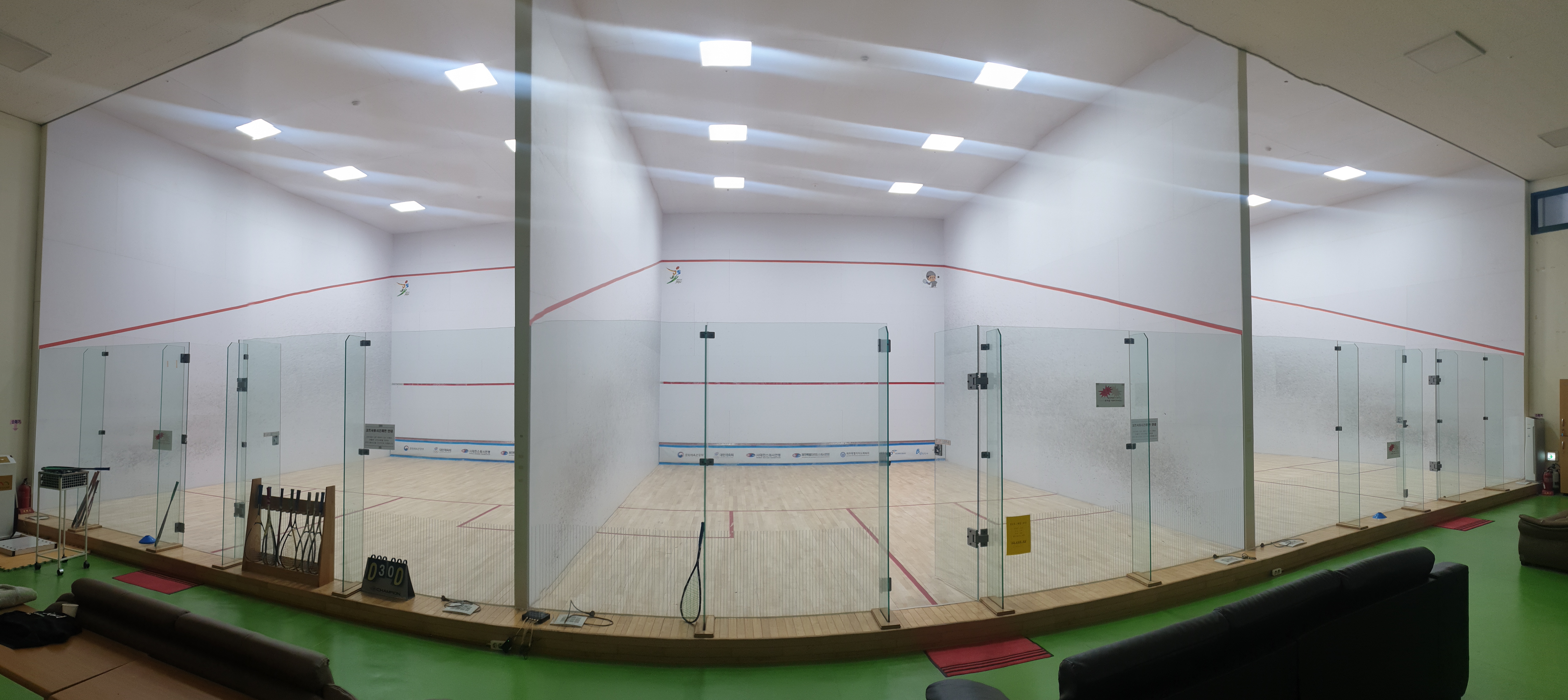
Jeju is a great place to train for young athletes. The sports complex in Jeju city boasts a variety of facilities including 8 tennis courts, 3 international squash courts, table tennis courts, along with climbing walls, inline skating, a baseball stadium and a swimming pool. I have coached squash players at a variety of levels from complete beginners to Canada Games athletes where top juniors from each province compete against the best in Canada. I was lucky to be a member of a small squash club in South Western Ontario that has produced some of the top university players in Canada and to go to University in Prince Edward Island and be involved in coaching some of the Canada Games players based in Prince Edward Island.
Along the way, I had the pleasure of meeting some amazing people, including Jonathon Power when he was a junior rising through the ranks in Toronto and then later his sister Courtney in Halifax, and his father John, who retired to Prince Edward Island after a long coaching stint at Dartmouth University. Two people who had a major impact on my life were Shaman Seth and Lester Jinks. Shaman and Lester were both amazing players and difficult opponents, but their real legacy was their large family of national champions, with sons and daughters who have won national titles in various age groups and as university athletes.
For me, the squash community has been an extended family since the day Bill Smyth asked me why I wasn't joining his squash club and extended me a line of credit to join. Ten years later, while I was working at the reception at the Elora Mill, he dropped by on his bicycle and asked me why I wasn't at university and again extended me a line of credit to put me on a plane the following week to resume my studies at University of Prince Edward Island, where I placed second in the Atlantic University Team Squash Tournament along with two of my students in Halifax in my final year.
I was honored to represent Prince Edward Island in the Canadian Men's Team Championships alongside the legendary Gordie Lawlor and his prodigy Scott Gamble. I watched Andrew Lynn demonstrate some amazing trick shots as he conducted a clinic playing some of the top provincial players from across the country.
The last competitive tournament I played was in 2001, where I beat Brad Jones from Northfield in a very tough second-round match before losing in the final to a tennis pro from Northfield Doon. I expect I was one of the last players to beat Brad Jones in the early rounds of a tournament for the next decade and only managed because I was more than a decade older than him. I was also lucky to be on the opposite side of the draw from Jonathon Madruga, a top junior from my club who lost to the tennis pro in the semi-finals and beat me regularly. The following year, Jonathon went on to play at Western University, which dominated Canadian University Squash, with a 40-year undefeated streak in the Canadian University Team competition.
To say I owe a tremendous debt of gratitude to the squash community is an understatement. Hopefully, I can help some of the juniors in Jeju start along the road to academic and athletic success in that order, as that was the valuable lesson that was passed to me by Bill Smyth, who ran a squash club in his spare time between being the Dean of Independent Studies at the University of Waterloo and completing a PhD in English Literature at the University of Toronto.
- Teacher: Tom Carlaw
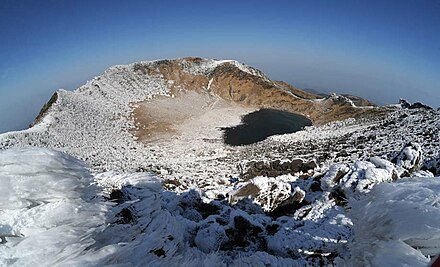
Jeju is a unique ecosystem, located in the Northern Pacific Ocean it is the site of the highest peak in South Korea and during the winter you can walk along beaches with palm trees looking at snow-capped Hallasan mountain. There are 360 smaller volcanic cones throughout the island. Within the ecosystem of Jeju there are several distinct ecosystems with plants that prefer either low elevation or high elevation, hot temperatures or cold. On the coast, you can find thriving wild populations of cacti while the mountain is home to a species of fir trees native to Korea that make excellent Christmas trees. A trip to Jeju is a geological wonderland easily walked but with contrasting ecosytems making it an unforgettable ecological journey.
- Teacher: Tom Carlaw